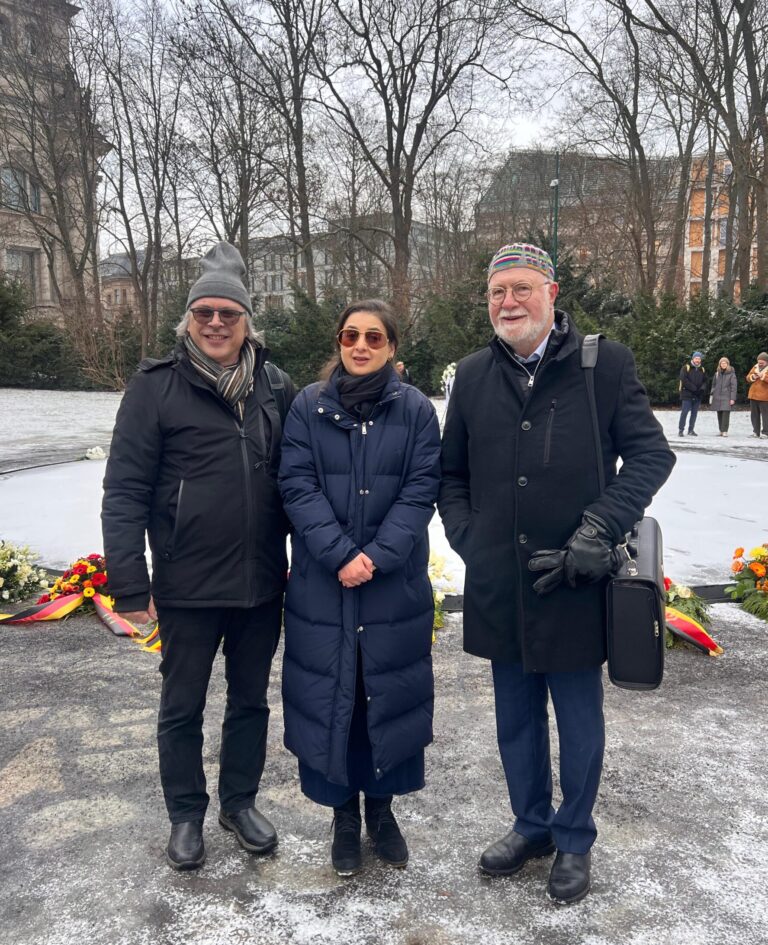
Minderheitenrat nahm am internationalen Tag des Gedenkens an die Opfer des Nationalsozialismus teil
Der Minderheitenrat gedenkt der Opfer des nationalsozialistischen Völkermords an den ermordeten Sinti und Roma.
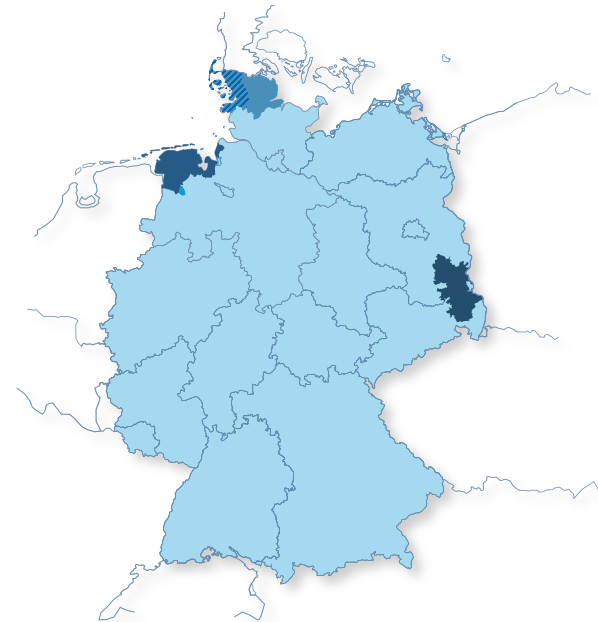
German Sinti and Roma
> More information
Lusation Sorbs
> More information
Sater Frisians
> More information
East Frisians
> More information
Danish Minority
> More information
North Frisians
> More information

Der Minderheitenrat gedenkt der Opfer des nationalsozialistischen Völkermords an den ermordeten Sinti und Roma.

Das Minderheitensekretariat war zu Gast beim parlamentarischen Frühstück von Carmen e.V.
Das Land Brandenburg stellt zur Förderung der sorbischen/wendischen Kultur und Sprache mehr Geld zur Verfügung. Das hat das Kabinett am 27.01.2026 in Potsdam beschlossen.

Die Präsidentin der BTU, Gesine Grande, und der Direktor des SI, Hauke Bartels, unterzeichnen eine Kooperationsvereinbarung.

Dawid Statnik stellte im Parlamentskreis Minderheiten zentrale Anliegen der nationalen Minderheiten vor.
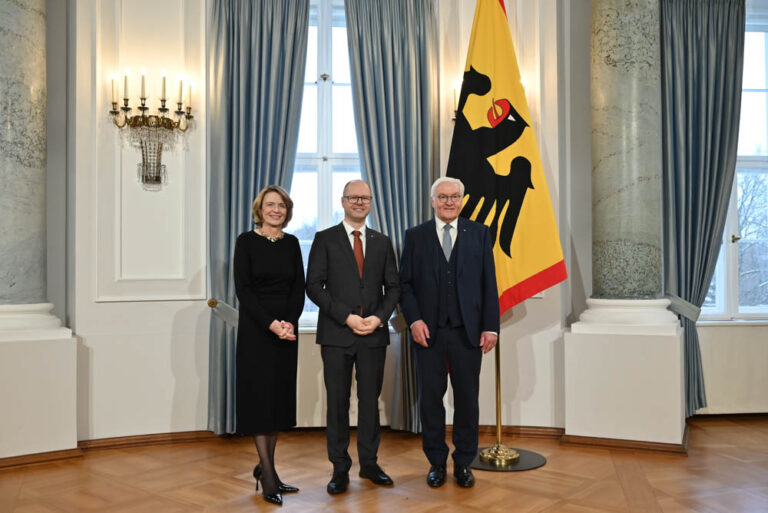
Dawid Statnik nimmt am Neujahrsempfang des Bundespräsidenten teil. Das Minderheitensekretariat verabschiedet Nele Feuring.
Germany is home to four recognised autochthonous national minorities and ethnic groups: the Danish minority, the Frisian ethnic group, the German Sinti and Roma and the Lusatian Sorbs. The Minority Council and Minority Secretariat represent the common interests of these four minorities in political life and the public sphere.
Autochthonous national minorities and ethnic groups are distinct from immigrants (also known as allochtonous/new minorities), who have not traditionally lived in Germany.
The Minority Secretariat was founded in Berlin in 2005. It assumes the secretariat function for the Minority Council in its daily work, and functions as the Council’s interface to the federal government, the two houses of the German Parliament (Bundestag and Bundesrat) and the Council of Europe. The Minority Secretariat also informs the public, institutions, and political stakeholders about the four autochthonous national minorities and ethnic groups of Germany and their current issues.
The Minority Council represents the common political interests of the four autochthonous national minorities and ethnic groups of Germany in dealings with the federal government and the two houses of the German Parliament, the Bundestag and Bundesrat. The Minority Council is supported in its daily work by the Minority Secretariat in Berlin.
Key priorities in the safeguarding of interests of the four recognised minorities are securing continuous political representation and fulfilling applicable obligations of protection in Germany as stipulated in minorities law. Furthermore, active information and public relations work is intended to make people aware of the concerns of minorities. Read more about current priorities in minorities work here.
Here you can find contact information on our partners, interest groups, supporters and groups and societies of the respective minorities and ethnic groups associated with the Minority Council.
There exist numerous international agreements and national regulations for the protection of national minorities. German, European, and international law stipulate provisions affording equal protection to all national minorities and ethnic groups living in Germany, along with their languages and the Low German regional language. These general regulations do not differ in applicability from one group to another.